Hooked on Headlines: How the Never-Ending News Feed Is Quietly Breaking American Minds
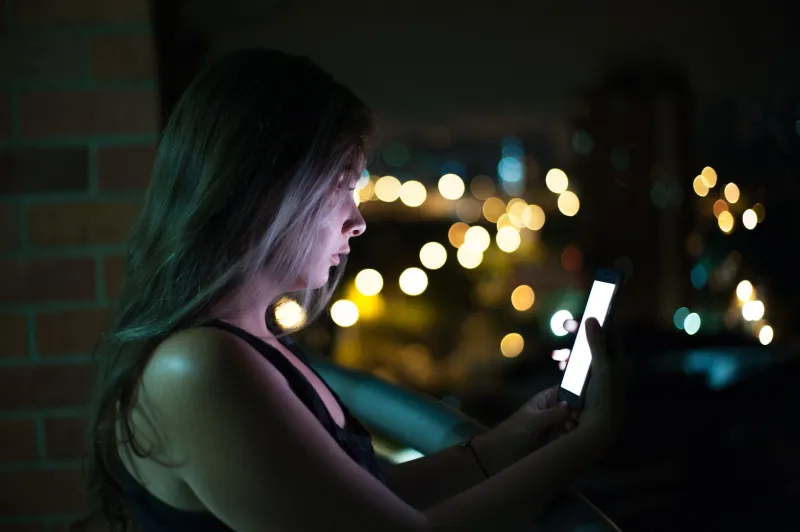
It's 11:47 PM on a Tuesday. You told yourself you'd be asleep by ten. Instead, you're four tabs deep into a breaking political story that may or may not matter by morning, your thumb still scrolling even though your eyes stopped reading ten minutes ago. Sound familiar? You're not alone — and you're not weak. You're caught in one of the most sophisticated psychological traps ever built.
The modern American news cycle doesn't just inform. It hooks. And the data backing that up is impossible to ignore.
The Numbers Don't Lie
According to a 2023 Gallup survey, more than 40% of Americans described themselves as "news fatigued" — yet screen time data tells a completely different story. The average U.S. adult now spends close to seven hours a day staring at screens, with news consumption accounting for a growing slice of that pie. Nielsen reported that digital news traffic surged by nearly 60% between 2019 and 2023, much of that growth driven by mobile alerts, push notifications, and social media feeds designed to keep eyes locked.
So we're exhausted by the news. And we can't stop reading it. That contradiction isn't accidental.
Your Brain on Breaking News
Dr. Pamela Rutledge, director of the Media Psychology Research Center, has spent years studying how continuous media exposure affects cognitive behavior. Her findings are sobering. "The human brain is wired to prioritize threat detection," she explains. "When headlines frame every story as urgent, dangerous, or unprecedented, your nervous system responds accordingly — even if the actual danger is thousands of miles away or not a danger at all."
This is the neurological loop that drives doom-scrolling. Each alarming headline triggers a small release of cortisol, the stress hormone. Your brain then craves resolution — an update, a follow-up, a new development that might signal the all-clear. But in a 24/7 news environment, that resolution never comes. There's always another alert. Another angle. Another expert weighing in. The loop keeps spinning.
Psychologist Dr. Steven Stosny coined the term "headline stress disorder" back in 2017, and mental health professionals say the phenomenon has only intensified since then. Anxiety disorders in the U.S. have climbed steadily year over year, and while no single cause can explain that rise, chronic news exposure keeps showing up as a significant contributing factor in clinical research.
The Machine Is Built This Way on Purpose
Here's the part that should make you pause: none of this is a bug. It's a feature.
Digital media platforms and news organizations operate on attention economies. Every second you spend on a page, every story you click, every notification you open — it all translates into advertising revenue. The longer you stay, the more valuable you are. And the most effective way to keep you staying is to keep you feeling like something important might happen if you look away for just one second.
"Urgency is the product," says media critic and author Jeff Jarvis. "The news industry figured out a long time ago that calm, contextualized reporting doesn't drive the same traffic as breathless, real-time updates. The economic incentives point directly toward anxiety."
Push notifications are particularly effective weapons in this arsenal. Studies show that even receiving a news alert — regardless of whether you open it — is enough to spike cortisol levels and disrupt concentration. Your phone buzzes, your brain reacts. Every single time.
Who's Getting Hit the Hardest
Not everyone is equally vulnerable, but the patterns are revealing. Pew Research data shows that younger Americans between 18 and 34 consume news at higher rates than any previous generation did at the same age — but they also report the highest levels of news-related stress. Women, particularly those with children, report disproportionately high anxiety tied to news consumption. And people in politically engaged households — those who describe themselves as closely following current events — show measurably higher cortisol baselines than those who check the news casually.
The irony is painful: the people most committed to staying informed are often the ones paying the steepest psychological price for it.
Breaking the Loop Without Going Dark
The good news — and yes, there is good news — is that you don't have to choose between staying informed and staying sane. Behavioral researchers have identified several practical strategies that actually work.
Set hard time windows. Rather than allowing news to bleed into every hour of your day, designate two or three specific windows for catching up — say, 8 AM, noon, and 6 PM. Outside those windows, notifications stay off. Your brain gets the signal that it's safe to disengage.
Audit your alert settings ruthlessly. Most Americans have dozens of apps pushing notifications they never consciously enabled. Go through your phone right now and turn off every news alert that isn't genuinely essential to your daily life. You'll be shocked how much quieter your nervous system gets.
Distinguish between news and noise. Ask yourself: "Will this story matter in three days?" If the honest answer is probably not, give yourself permission to skip it. Not every breaking development requires your immediate attention.
Replace scrolling rituals with something physical. The late-night doom-scroll often fills a boredom or anxiety void. Identifying what you're actually looking for — distraction, connection, stimulation — and finding a non-screen alternative can interrupt the habit loop more effectively than willpower alone.
Follow the story, not the moment. Instead of tracking every live update on a developing situation, wait for the next-day wrap-up. You'll get the same information with a fraction of the anxiety, and the analysis will almost always be more accurate than the real-time chaos anyway.
The Bigger Picture
The 24/7 news machine isn't going anywhere. If anything, it's getting faster, louder, and more algorithmically sophisticated at finding your particular pressure points. That's the reality of American media in 2024 and beyond.
But understanding how the trap works is the first step toward stepping out of it. You can stay engaged with the world — genuinely, meaningfully engaged — without handing your nervous system over to an attention economy that profits from your anxiety.
The news will still be there in the morning. Your mental health is the story worth protecting tonight.