The Hill After Hours: What's Really Happening in Congress When the Cameras Go Dark
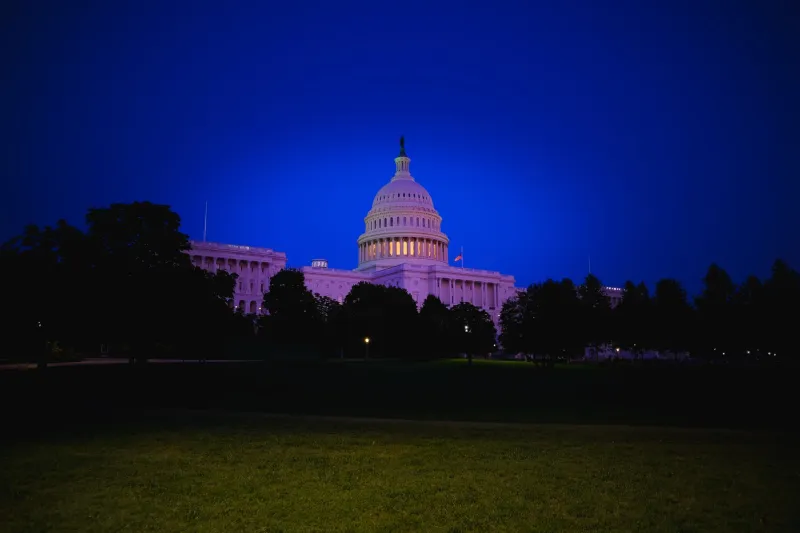
It's 11:47 p.m. on a Thursday. Most of official Washington has gone home, the cable news panels have wrapped up, and your social media feed has moved on to celebrity gossip and viral videos. But inside the Capitol building, the lights are still on. A vote is being called. Staffers are scrambling. And a provision that could affect millions of Americans is being quietly tucked into a bill that won't make the morning shows.
This is Congress after dark — and it's arguably where more of the real work gets done than during any televised hearing.
Why the Late-Night Sessions Actually Matter
American political coverage has a primetime problem. The Sunday shows, the afternoon press conferences, the carefully staged committee hearings — these are the moments that dominate the news cycle. But the legislative machinery of the United States government doesn't run on cable news scheduling. It runs on deadlines, procedural maneuvering, and the kind of grinding negotiation that doesn't make for compelling television.
Late-night and weekend sessions in Congress have a long history of producing some of the most consequential legislative outcomes in recent memory. The Affordable Care Act's pivotal votes, the 2017 tax overhaul, and several recent government funding battles all featured dramatic after-hours moments that most Americans only read about in brief news summaries the following morning — if they read about them at all.
"The honest truth is that a lot of the most important stuff happens when nobody's watching," says a senior Senate staffer who has worked on Capitol Hill for over a decade and spoke to us on background. "Not because people are trying to hide it, necessarily. It's just that the process is messy and slow and it doesn't fit into a three-minute news segment."
The Mechanics of a Midnight Vote
So what actually happens during one of these late-night legislative sessions? The process is more procedurally complex — and frankly more chaotic — than most civics textbooks suggest.
When a vote is called after hours, senators and representatives are often scattered across the building, in their offices, in the dining facilities, or in the middle of private meetings. The cloakrooms — those hushed, members-only spaces just off the main chamber floors — become hubs of last-minute deal-making. Votes that seem settled can flip in the final minutes as holdouts are pulled aside and offered concessions ranging from specific bill amendments to promises of future support on unrelated legislation.
One former House leadership aide described a particular budget vote from two years ago that nearly collapsed three separate times between 10 p.m. and 2 a.m. before a modified version finally passed. "There were conversations happening in hallways, in stairwells, on phones. It looked nothing like what you'd imagine watching C-SPAN," they told us. "The version that passed at 1:30 in the morning was substantially different from what had been on the table at dinner."
The Weekend Session Phenomenon
Weekend legislative sessions present their own unique dynamic. With fewer staff present, reduced media presence, and members who are often eager to get back to their home districts, the pressure to move quickly can produce outcomes that reward whoever is most prepared to push.
Insiders describe a particular kind of strategic patience that experienced legislators and their teams deploy specifically for these moments. The goal is simple: wait until the other side is tired, distracted, or just wants to go home — and then make your move.
"Weekend sessions are when you see the real chess players," says a former Congressional Budget Office analyst who now works in policy consulting. "The members who understand procedure deeply, who know exactly what motions to make and when — they have an enormous advantage when everyone else is running on fumes."
This dynamic has real policy consequences. Several significant amendments to major legislation over the past few years were introduced and passed during weekend sessions with minimal floor debate and, crucially, minimal media coverage. By the time Monday morning analysts were parsing the text, the window for public pressure had largely closed.
What the Cameras Miss
Beyond the votes themselves, the hallways and backrooms of the Capitol host a constant, largely invisible ecosystem of negotiation. Lobbyists don't vanish after business hours. Staff meetings that start at 7 p.m. can run until midnight. And the informal conversations that happen between members — in elevators, in the gym, over late dinners at the Capitol Hill Club or Bullfeathers — often do more to shape legislation than any formal committee hearing.
The rise of texting and encrypted messaging apps has added another layer of opacity to this process. Where previous generations of legislators conducted their behind-the-scenes negotiations in person or over landlines that left paper trails, today's Congressional communications exist in a digital gray zone that oversight mechanisms haven't fully caught up to.
"The relationship-building, the favor-trading, the 'I'll give you this if you give me that' — none of that happens on C-SPAN," says Dr. Marcus Webb, a political science professor at American University who studies Congressional behavior. "It's not unique to any party or any era. It's just how legislatures work. The question is whether the public has enough visibility into the outcomes."
The Media Gap and What It Costs You
The practical effect of this coverage gap is that a significant portion of American lawmaking happens with minimal public scrutiny. Local news organizations, which once provided granular coverage of how their specific representatives voted and what deals they cut, have been gutted by two decades of economic pressure. National outlets focus on the most dramatic, conflict-driven moments. And the procedural minutiae that determine how bills actually get written — the amendment process, the conference committees, the reconciliation maneuvers — rarely break through to mainstream audiences.
This isn't a conspiracy. Nobody at any major news organization is deliberately ignoring late-night votes. It's a resource and attention problem. There are only so many journalists, only so many hours in a broadcast day, and only so much audience appetite for the granular mechanics of governance.
But the consequences are real. Provisions affecting prescription drug pricing, agricultural subsidies, infrastructure funding formulas, and dozens of other policy areas have been modified or inserted into legislation during off-hours sessions with essentially no public debate.
What You Can Actually Do About It
For engaged citizens who want to keep tabs on what their representatives are doing at all hours, the tools exist — they just require some effort. The Congressional Record is publicly available and updated regularly. GovTrack.us and Congress.gov both track votes in near real-time. And several nonpartisan watchdog organizations, including the Sunlight Foundation's successor projects, specifically monitor after-hours legislative activity.
Your representative's official website is also required to post voting records. It's not glamorous reading. But in a democracy where the most consequential decisions sometimes happen at 1 a.m. on a Saturday, knowing how to find that information might be the most civic thing you do all week.
The cameras go dark. The work doesn't stop. And America 24/7 will keep watching so you don't have to do it alone.
America 24/7 covers American politics around the clock, from primetime hearings to midnight votes. Bookmark us for continuous updates.