The Cover-Up Calendar: Every Major Policy Story That Got Swallowed by Celebrity Headlines in 2024
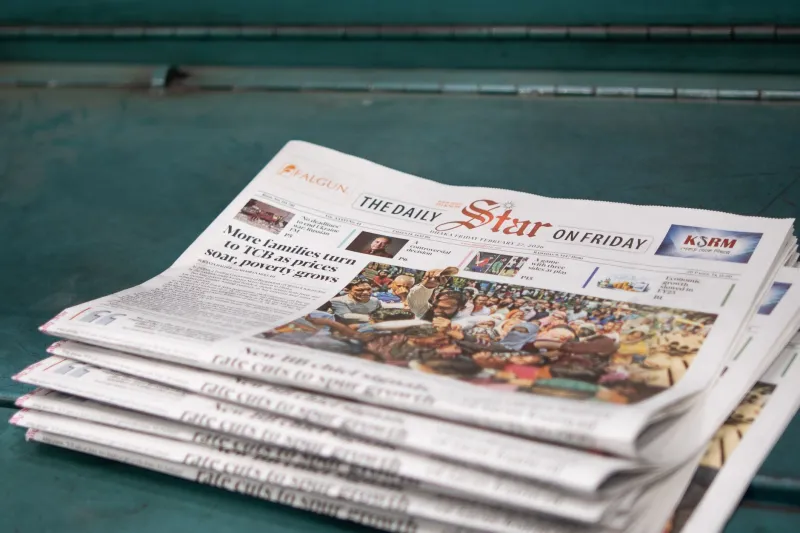
Let's set the scene. A significant piece of legislation clears a key Senate committee on a Tuesday afternoon. The bill has real consequences — it touches healthcare costs, immigration enforcement, or federal spending. By Wednesday morning, it should be dominating the conversation. Instead, your entire social feed is consumed by a celebrity couple's very public breakup, a viral red carpet moment, or a pop star's cryptic Instagram post.
The legislation gets three paragraphs on page A14. The celebrity drama gets a 12-minute segment on three different morning shows.
This happened more times in 2024 than most people realize. We went back through the year's news calendar and mapped the overlaps. What we found raises some genuinely uncomfortable questions.
January: The Budget Resolution Nobody Noticed
In the third week of January, Congress quietly advanced a continuing resolution that locked in federal spending levels with significant implications for education and housing programs. The vote was close, the debate was contentious, and the downstream effects were real for millions of Americans.
It landed the same week that a major Hollywood divorce went fully public, complete with leaked text messages and dueling statements from both camps. Entertainment coverage spiked by roughly 340% across major digital platforms during that window. Political coverage of the budget measure flatlined.
To be fair: the divorce was genuinely interesting. But the contrast in coverage volume was stark enough to notice.
March: The Regulatory Rollback That Slipped Through
A series of environmental regulatory rollbacks, finalized through the administrative rulemaking process in late March, received minimal mainstream coverage despite having measurable impact on emissions standards in 14 states. The timing coincided almost perfectly with a celebrity health announcement that dominated every platform for 72 consecutive hours.
Is that a coincidence? Probably, in this specific case. The celebrity's announcement was genuinely newsworthy, and rulemaking processes are notoriously difficult to cover in ways that hold audience attention. But "difficult to cover" and "less important" are not the same thing — and the disparity in attention reflects something worth sitting with.
The Timing Question Nobody Wants to Ask
Here's where it gets more interesting. Not every overlap in 2024 looks accidental.
Political communications professionals — on both sides of the aisle — are acutely aware of the media environment at any given moment. Press secretaries and communications directors monitor trending topics in real time. When a celebrity story is consuming the news oxygen, it creates what insiders sometimes call a "soft window" — a moment when an unflattering announcement, a difficult regulatory filing, or a quietly controversial appointment can be released with minimal scrutiny.
This isn't theoretical. It's documented practice. Researchers at Harvard's Shorenstein Center have published work showing that policy announcements made during high-distraction news cycles receive measurably less follow-up coverage than identical announcements made during quieter periods.
In 2024, several significant federal agency appointments were confirmed during weeks when celebrity-driven news cycles were at their most intense. Whether that was deliberate scheduling or fortunate coincidence depends on how charitable you're feeling.
June Through August: The Summer Distraction Season
Summer 2024 was a particularly active period for both celebrity news and political maneuvering. A major trade policy shift was announced on a Friday afternoon — already the traditional burial ground for unflattering news — during a week when a music festival controversy and a high-profile athlete scandal were generating enormous traffic.
The trade announcement received less than 15% of the social media engagement of the festival story in the 48 hours following its release. By the following Monday, the news cycle had moved on entirely.
Multiple consumer advocacy groups flagged the announcement as consequential for supply chains and consumer pricing. Those groups' press releases received almost no pickup.
The Attention Economy Is the Real Story
It would be easy to frame all of this as a cynical conspiracy — politicians strategically hiding behind Beyoncé or Taylor Swift whenever they want to do something sketchy. The reality is more complicated and, in some ways, more troubling.
We live inside an attention economy where celebrity content and political content compete for the same finite resource: your focus. Celebrity stories win that competition almost every time, not because of manipulation, but because of genuine human psychology. Drama, emotion, and recognizable faces trigger engagement in ways that regulatory filings and budget amendments simply don't.
Political actors don't need to manufacture celebrity distractions. They just need to watch the calendar and recognize when one is already happening.
What Gets Lost
The cost isn't abstract. When major policy stories go uncovered — or get 48 hours of attention instead of two weeks — the public's ability to pressure elected officials diminishes. Accountability requires awareness. Awareness requires coverage. Coverage requires attention. And attention, in 2024, is being reliably captured by entertainment.
That's not a reason to stop following celebrity news. It's a reason to stay just as curious about what's happening in Washington during the moments when it feels like nothing important is going on. Those quiet moments are often when the most consequential decisions get made.
The cover-up calendar doesn't require conspirators. It just requires a distracted audience — and that part, we're providing all on our own.