Darkness Is Their Strategy: Inside the Late-Night Political War Rooms Running America's News Cycle
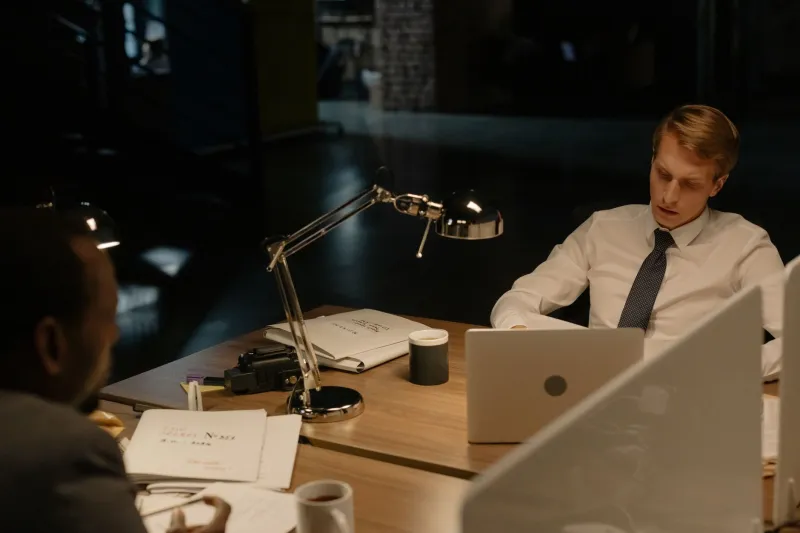
It's 2:17 AM on a Tuesday in October. Most of America is deep into REM sleep, dreaming about anything other than politics. But in a nondescript office suite in northern Virginia, six people are hunched over laptops, phones glowing, energy drinks half-finished, doing something that will directly shape what 330 million people read with their morning coffee.
Welcome to the graveyard shift of American political warfare.
This isn't a conspiracy theory. It's a strategy — refined over decades, supercharged by social media, and running 365 nights a year regardless of whether there's an election on the horizon. The people who run these operations have a name for it: the window. That quiet stretch between roughly 11 PM and 4 AM when the mainstream press has largely logged off, the cable news anchors have handed the desk to the B-team, and the average voter is completely checked out.
For political operatives, that window is pure gold.
Dropping the Bomb When Nobody's Watching
"The goal is always to control the frame," says Marcus Delray, a former opposition research director who worked on three Senate campaigns before leaving the business in 2022. "If you drop something damaging at 2 AM, you get to set the narrative before the other side even wakes up. By the time their communications team is on their second cup of coffee, the story has already been written — and it was written your way."
This tactic has a formal name in campaign circles: the "soft drop." Rather than holding a press conference or blasting out a press release during business hours — where reporters can immediately push back, request comment, or contextualize — operatives quietly feed information to a single trusted journalist late at night. The story goes live while the target is asleep. By morning, it's everywhere, and the damage is already done.
The examples are hiding in plain sight once you know what to look for. Think about how many major political scandals first surfaced through a single late-night report from one outlet. Think about how many policy leaks land in the inbox of a specific reporter at 11:45 PM. That's rarely an accident.
The Trial Balloon and the 3 AM Float
Not everything that happens in the dead of night is designed to destroy someone. Sometimes it's about testing the water without getting wet.
Political strategists frequently use late-night hours to float what insiders call "trial balloons" — early, unofficial hints at policy positions or personnel decisions that allow a campaign or administration to gauge public reaction before committing to anything officially.
"You leak something vague at 1 AM, see how Twitter responds by 7 AM, and if it's bad, you've lost nothing," explains former White House communications aide Tara Winslow, who asked that her specific administration not be identified. "Nobody on record said anything. There's no official statement to walk back. You just quietly let it die and move on."
Both parties do this with remarkable regularity. Cabinet picks get floated. Tax proposals get tested. Controversial social positions get anonymously sourced into existence — and then just as anonymously disappear if the reaction is ugly.
The 24-hour news cycle didn't create this dynamic. But smartphones and social media turbocharged it into something far more precise and far more ruthless.
Rapid Response That Never Sleeps
Modern campaigns don't just use the overnight hours to go on offense. The graveyard shift is equally critical for playing defense.
Every major campaign now operates some version of a round-the-clock rapid response operation. Junior staffers — usually underpaid, overcaffeinated, and deeply committed — monitor every platform, every wire service, and every regional newspaper website through the night. Their job is simple: catch anything bad before it gains traction, and get ahead of it.
"The worst thing that can happen is waking up at 6 AM to find out a story has been circulating for four hours and you're already behind," says political consultant Jerome Hatch, who has advised campaigns at the congressional and gubernatorial level. "Every minute you're not responding is a minute the other side is defining you."
This is why, if you've ever noticed a political campaign tweeting or issuing statements at oddly specific hours — 2:30 AM, 3:15 AM — there's almost certainly a human being behind that, not a scheduler. Someone is actively watching, waiting, and ready to pounce.
The Media's Complicated Role
Here's where it gets a little uncomfortable: journalists aren't entirely passive in this system.
The relationship between late-night operatives and the reporters who cover them is symbiotic in ways that don't always serve the public. Reporters need scoops. Campaigns need placement. The graveyard shift is where those two needs quietly shake hands.
A reporter who publishes a campaign-fed story at midnight gets a traffic spike when the East Coast wakes up. The campaign gets their preferred framing out ahead of the news day. Everyone wins — except possibly the reader who has no idea the story's timing and sourcing were engineered.
"I'm not saying reporters are doing anything wrong," Delray is quick to clarify. "Most of them know exactly what's happening and they do the best they can to report it fairly. But the system is set up in a way that rewards this kind of information laundering. That's just the reality."
What You Can Actually Do About It
Here's the honest truth: you probably can't stop this. It's been baked into American political culture for decades, and if anything, the rise of digital media has made it more sophisticated, not less.
But you can be a smarter consumer of it.
When a major political story breaks late at night — especially one that conveniently drops just before a debate, a vote, or a news cycle that was previously going badly for one side — ask yourself a few questions. Who benefits from this story breaking now? Who was the first outlet to report it, and what's their relationship with the campaign in question? Is this a single anonymous source, or is there actual documentation?
The 2 AM political war room isn't going anywhere. But the more you understand how it works, the harder it becomes for it to work on you.
America 24/7 stays on so you don't have to. But it doesn't hurt to know what's happening while you're not.