Sorry, Not Sorry: The Ruthless Science of Celebrity Apology Videos That Actually Work
There's a moment — somewhere between the first viral screenshot and the trending hashtag — when a celebrity's entire team shifts into a specific kind of emergency mode. Phones start buzzing. Group chats explode. A crisis PR firm gets a very expensive phone call. And within hours, a plan starts forming around a deceptively simple question: how do we flip this narrative before it becomes permanent?
The answer, more often than not, is a video apology. But not just any apology. What we're talking about is a precisely engineered piece of content, timed to the minute, scripted to feel unscripted, and designed to work with platform algorithms rather than against them. In the social media age, saying sorry is a production — and the best ones follow a formula that most of us never notice until it's already worked.
The 72-Hour Window Is Real (And Non-Negotiable)
Ask any crisis communications strategist and they'll tell you the same thing: the window between a scandal breaking and public opinion calcifying is roughly 48 to 72 hours. After that, the narrative hardens. People have formed their takes, the late-night hosts have written their jokes, and the algorithm has already decided what the story is.
That's why the timing of a response video is never accidental. Teams track engagement curves obsessively — watching for the exact moment when outrage peaks and starts to plateau. Post too early, and you look defensive, like you got caught. Post too late, and the story has moved on without you, usually in the worst possible direction. The sweet spot is right when the discourse is loudest but before the mainstream media has finished writing their long-form takedowns.
What's wild is how precise this has become. We're not talking about gut instinct anymore. There are firms in Los Angeles and New York running literal sentiment analysis dashboards in real time, feeding celebrities and their managers data on when their name is spiking, what words are being associated with it, and which platforms are driving the most damage.
The Production Behind the "Raw" Moment
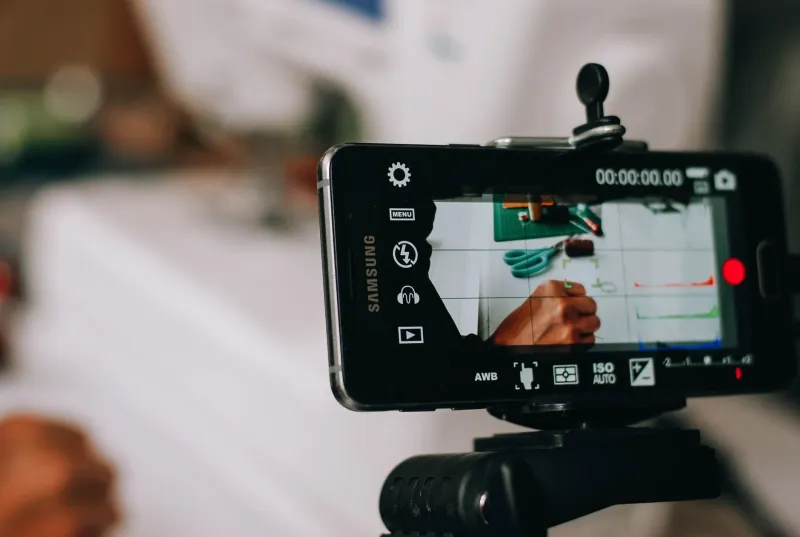
Here's where it gets interesting — and a little uncomfortable. The most effective celebrity apology videos are the ones that look like they were filmed on a phone, in a car, with puffy eyes and zero makeup. No ring lights. No professional color grading. Just a person and their feelings, right?
Wrong. Almost always wrong.
Those "raw" videos are frequently shot multiple times, reviewed by PR teams, and sometimes even workshopped with dialogue coaches. The slightly shaky camera angle? Intentional. The pause before the emotional part? Rehearsed. The casual setting — a couch, a parked car, a kitchen table — is chosen specifically because it signals authenticity to an audience that has learned to distrust anything that looks too polished.
This isn't cynicism for its own sake. It's just how the machine works now. Audiences have become genuinely sophisticated at detecting corporate-feeling apologies, so the production value of a good apology video has paradoxically become making it look like there is no production value.
Five Cases That Show the Playbook in Action
Look at how this played out across a handful of recent high-profile situations and the pattern becomes almost impossible to ignore.
When a major streaming-era actress faced backlash over resurfaced social media posts, her team waited exactly 61 hours before dropping a teary iPhone video. It was posted at 7:14 PM on a Thursday — prime scroll time — and within six hours had more supportive comments than critical ones. By Friday morning, the coverage had shifted from "what she said" to "how brave she was to address it."
A chart-topping musician who blew up over a live show incident took a different approach: silence for 48 hours, then a joint appearance on a podcast known for long-form, sympathetic conversations. No formal apology video at all. Instead, the narrative got reframed through a 90-minute conversation that let him control every word. Spotify streams actually went up that week.
A reality TV personality used a more aggressive version of the playbook — dropping her apology video and announcing a charitable donation in the same post, effectively forcing any coverage to mention both pieces of news simultaneously. The donation story crowded out the original scandal within 36 hours.
One comedian who faced significant professional backlash did something counterintuitive: he waited almost five full days, let the story breathe, and then posted a written statement — not a video — that was so unusually direct and specific that it generated its own wave of coverage just for being different from what everyone expected. The "surprisingly honest apology" became the new story.
And then there's the case of a former child star whose social media meltdown became a full news cycle — until her team orchestrated a sit-down with a sympathetic journalist, timed to drop on a Sunday afternoon when competing news was slow. The piece ran with a headline focused on her "journey" rather than her mistakes. By Monday, the algorithm was serving that piece to everyone who'd previously searched her name.
The Algorithm Is the Real Audience
Here's something the PR world understood before most of us did: you're not really making an apology for the people who are angry at you. You're making it for the algorithm.
Platforms like TikTok, Instagram, and YouTube actively reward content that generates high engagement — including the kind of emotional, polarizing engagement that a celebrity apology creates. When a video gets flooded with both supportive and critical comments, the algorithm reads that as highly engaging content and pushes it to more people. A well-timed apology video can literally go more viral than the original scandal, which means the celebrity gets to define the story for a whole new audience that never even saw what started the whole thing.
This is why the language in these videos is so carefully calibrated. Phrases that invite debate — "I know not everyone will forgive me" or "I'm still learning" — generate comment threads. Comment threads generate reach. Reach generates a news cycle that's now centered on the response, not the offense.
Does Any of This Actually Change Minds?
That's the question nobody in the PR world particularly wants to answer out loud. The honest answer is: sometimes, and it depends entirely on what the original offense was.
For incidents rooted in poor judgment, bad timing, or social media carelessness, the 72-hour flip genuinely works. Public memory is short, algorithmic attention is shorter, and a well-executed response can genuinely shift how people feel.
For deeper, more serious allegations, the video apology is less a fix and more a pressure valve — something to buy time and slow the bleeding while the legal and business decisions get sorted out in the background.
What's changed is that we now live in an era where not responding quickly and strategically is itself a choice with consequences. The machine doesn't pause. The algorithm doesn't wait. And for better or worse, the art of saying sorry has become one of the most sophisticated media operations in the entertainment industry.
Three days. That's all you get. Use them wisely.