Lights Out, Phones On: The Science Behind Celebrity Meltdowns That Always Happen at 3 AM
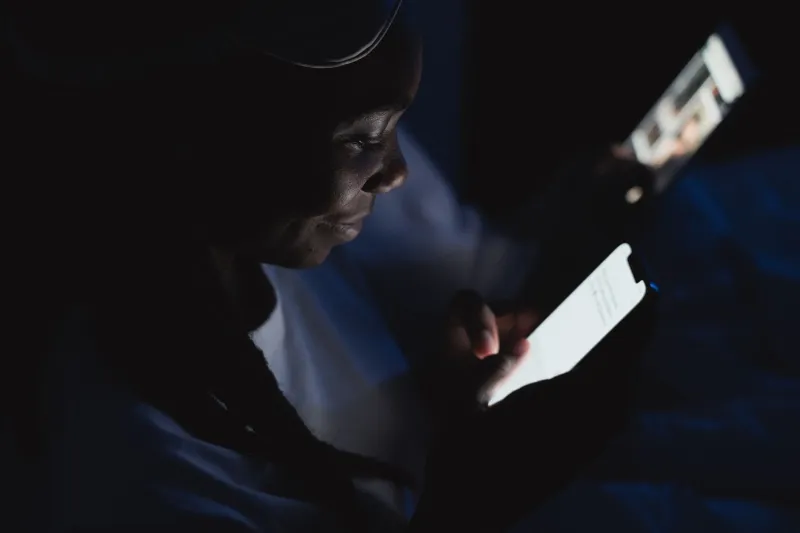
It never seems to happen at 2 in the afternoon. Nobody's having a public breakdown during a Tuesday morning coffee run. No — when a celebrity decides to go completely off the rails in full public view, it's almost always somewhere between midnight and 4 AM, when the rest of us are unconscious and the only witnesses are insomniacs, international fans, and the algorithm.
And somehow, by the time the East Coast wakes up and reaches for their phones, the whole thing has already been screenshotted, clipped, and dissected into a thousand hot takes.
Welcome to the 3 AM celebrity spiral. It's messy, it's oddly compelling, and it's not going away anytime soon.
Why Night Turns Famous People Into Different Versions of Themselves
Psychologists have a name for it — well, sort of. Sleep deprivation and late-night isolation are a known cocktail for impaired judgment, reduced impulse control, and heightened emotional sensitivity. Add to that the particular loneliness that comes with extreme fame — the kind where you're technically surrounded by people all day but somehow profoundly alone — and you've got a pressure cooker.
Dr. Jade Wu, a behavioral sleep medicine specialist, has written about how the hours between midnight and 4 AM represent a kind of neurological low tide. The prefrontal cortex — the part of your brain that says maybe don't post that — is running on fumes. Emotional responses feel bigger. Grievances feel more urgent. The urge to say something becomes almost physical.
For regular people, that might mean sending a weird text to an ex. For someone with 40 million followers and a phone in their hand, it means something else entirely.
The Phone Is the Problem (And the Audience)
Here's the part that makes the modern celebrity spiral so different from the tabloid meltdowns of previous decades: the star is broadcasting it themselves, in real time, directly to their audience.
Britney Spears shaving her head in 2007 was shocking — but it happened, and then the media reported on it. Today, that moment would be a live stream. Fans would be commenting in real time. Clips would be uploaded before she even left the salon.
That shift matters. When a celebrity goes live at 3 AM — glassy-eyed, rambling, clearly not okay — their audience isn't just a passive witness. They become participants. Comments flood in. Some are supportive. A lot are not. Screenshots get taken. People tag their friends. The moment becomes interactive entertainment, which is a deeply uncomfortable thing to say out loud but is nonetheless true.
And the celebrities know this. On some level, even in their most chaotic moments, they know someone is watching. Which raises a genuinely complicated question: is the audience part of what's pulling the spiral deeper?
Case Studies in Real-Time Unraveling
You don't have to dig very hard to find examples. The past decade has given us a startling number of late-night public breakdowns from people who, just hours earlier, were perfectly composed on a red carpet or in an interview.
Kanye West's years-long series of late-night Twitter and Instagram posts — which included everything from presidential proclamations to deeply personal attacks on family members — became a defining feature of his public persona. The posts almost always came in the small hours. Fans and critics alike would wake up to entire threads that had been written while most of the country slept.
Azealia Banks built an entire chapter of her public identity around late-night social media eruptions — some of which were genuinely alarming, others that seemed almost performative. The line between a real breakdown and a calculated provocation got blurrier with every post.
More recently, the rise of Instagram Live has given us an even more intimate window. Celebrities crying, confessing, confronting rumors, or just clearly struggling have become a recognizable format unto themselves. And unlike a tweet, a Live feels present. You're watching something happen right now, which creates a kind of parasocial urgency that's hard to look away from.
The Audience's Role Is More Complicated Than You Think
Let's be honest about something: a lot of us have watched one of these moments unfold in real time. Maybe you got a notification, clicked in, and found yourself watching a famous person you barely think about in the middle of a very bad night. And you stayed.
That's not a judgment — it's just the reality of how these moments work. There's a pull to it. Part concern, part voyeurism, part the strange intimacy of watching someone famous be genuinely, messily human.
But that audience participation has consequences. When fans flood the comments with "we love you" and "you're so real for this," they're providing a kind of validation that can actually encourage the behavior to continue. When critics screenshot and mock, they deepen whatever shame spiral is already happening. Either way, the audience isn't neutral. They're fuel.
Social media platforms know this too, and their algorithms are not designed with anyone's mental health in mind. A celebrity having a breakdown at 3 AM generates enormous engagement. Engagement is the product. The math is bleak.
Is There Any Way to Look Away?
Some celebrities have figured out workarounds — or have had them figured out for them. Publicists with access to client accounts. Trusted friends with standing instructions to confiscate phones after a certain hour. Taylor Swift's near-total absence from social media during certain periods of her career was widely read as a deliberate strategy to avoid exactly this kind of moment.
But for every star who builds guardrails, there are a dozen who don't. Fame is intoxicating, and the phone is always right there, and at 3 AM the judgment that usually keeps things contained just... isn't as strong.
The result is a cultural loop that doesn't seem to be slowing down. Celebrities spiral. Audiences watch. Platforms profit. Morning comes, the posts get deleted, and everyone acts like it didn't happen — until the next time.
What It Actually Says About Fame Right Now
Maybe the most honest thing you can say about the 3 AM celebrity spiral is that it's a symptom of a much larger dysfunction. Fame has always been isolating, but the current version — where you're expected to be constantly accessible, constantly performing, constantly on — is a particular kind of exhausting.
The middle of the night is the only time that performance pressure lifts even slightly. And for some people, that's exactly when the dam breaks.
We watch because we're curious, because we're bored, because there's something weirdly humanizing about seeing someone famous be an absolute mess at 3 AM. But it's worth pausing to notice what we're actually watching: real people, in real distress, broadcasting it to millions because the architecture of modern fame has made that feel like the only available outlet.
That's not entertainment. Or at least, it shouldn't be.
And yet — here we are, phones in hand, notifications on.