Buried by Bedtime: How Washington Quietly Drops Its Dirtiest Secrets While You Sleep
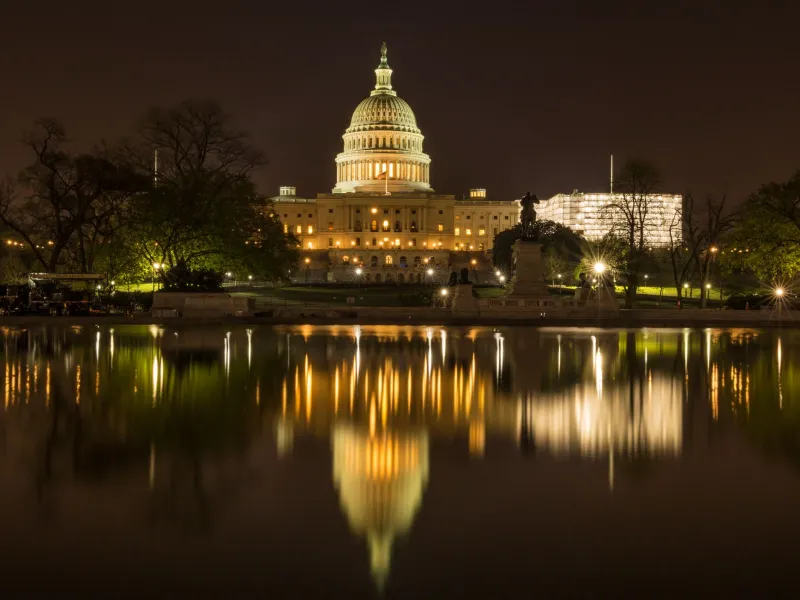
It's 1:47 AM on a Friday. Most of America is deep into REM sleep, Netflix has already asked if you're still watching, and the last thing anyone is doing is refreshing their news app. That's precisely the moment a government press office fires off a document dump that would have dominated the morning headlines — if only anyone had been awake to catch it.
Welcome to the 2 AM news dump. It's Washington's worst-kept secret and most effective weapon, all rolled into one.
The Anatomy of a Late-Night Drop
Government communications teams — whether at the White House, Pentagon, or a congressional office — operate on a simple psychological principle: information released when nobody is watching gets processed very differently than information released at noon on a Tuesday.
By the time morning anchors are sipping their first cup of coffee and producers are building their rundowns, a story that broke at 2 AM has already aged. It's no longer "breaking." It becomes a footnote. A scroll at the bottom of the screen. Maybe a paragraph buried in a broader roundup piece. The urgency evaporates, and with it, the public outrage that might have otherwise followed.
Political strategists have a more polished term for it: "minimizing the news cycle window." Everyday Americans might call it what it actually is — hiding the ball.
Real Examples That Slipped Through the Cracks
This isn't a conspiracy theory. The receipts are there if you know where to look.
In 2018, the Trump administration released a 500-page environmental impact report — one that acknowledged significant climate risks from continued carbon emissions — on the Friday after Thanksgiving. Not just any Friday. The single lowest-traffic news day of the entire year. Critics immediately called it a deliberate burial. The administration denied it. But the story never gained the traction it would have on a Monday morning.
Go back further and you'll find the Clinton-era practice of releasing politically sensitive documents on Friday afternoons became so notorious that journalists coined the phrase "the Friday news dump" — a term that's now part of the American political lexicon. Washington just updated the playbook and pushed the clock back a few more hours.
More recently, congressional offices have taken to posting committee reports, financial disclosures, and ethics findings in the dead of night. By morning, the story has already been partially digested, reacted to, and — critically — competed with an entire day's worth of new developments.
The Friday-Into-Saturday Pipeline
If the 2 AM drop is Washington's favorite trick, Friday night into Saturday morning is its preferred stage.
Think about it from a pure media logistics standpoint. Saturday morning news coverage is skeleton-crew territory. Weekend anchors have smaller audiences. Political talk shows that might dedicate an entire segment to a bombshell — your "Meet the Press" types — don't air until Sunday. That gives a story nearly 48 hours to cool before it gets the serious scrutiny it deserves.
Former White House communications staffers, speaking to various outlets over the years, have openly acknowledged that weekend timing is factored into release decisions. One former press secretary described it plainly: "You always ask yourself, what day do we want this to live on? Because the day you choose is the day it gets its biggest audience."
Choosing Saturday at 1 AM is essentially choosing a very, very small audience.
Who Actually Catches These Drops?
Here's the part that should make you genuinely uncomfortable: the people designed to catch these late-night releases are increasingly overwhelmed.
Newsrooms have gutted their overnight staffing over the past decade. Local news operations — once the backbone of accountability journalism — have been decimated by layoffs and consolidation. The reporters who are awake at 2 AM are often social media monitors or wire service staffers working with limited bandwidth to contextualize complex policy documents.
That leaves a narrow window of accountability that savvy communications teams have learned to exploit with remarkable precision.
Independent journalists and political watchdog organizations have started building alert systems specifically designed to flag late-night government document releases. Some use automated tools that scan federal registers, congressional databases, and official .gov domains around the clock. But even when these systems catch a drop, getting the story the oxygen it deserves — up against a 24/7 content cycle that's already moved on — is an uphill battle.
The Algorithm Doesn't Sleep, But It Does Forget
Social media has complicated the late-night dump strategy in interesting ways. On one hand, a truly explosive story can still detonate at 3 AM if enough accounts start amplifying it. Twitter — or X, if you must — has no off switch, and political junkies are genuinely nocturnal creatures.
But here's the catch: the algorithm rewards velocity and recency. A story that breaks at 2 AM and gets modest engagement through the early morning hours will often be algorithmically deprioritized by the time the bulk of users log on at 7 or 8 AM. The platform has already moved on to fresher content. The late-night drop essentially gets a head start on its own irrelevance.
Communications teams know this. They're not just thinking about reporters anymore — they're thinking about feeds, trending tabs, and what's going to be competing for attention when the country wakes up and starts doomscrolling over breakfast.
What You Can Actually Do About It
Look, we're not going to tell you to set an alarm for 2 AM and start reading federal document releases. That's not a sustainable life choice for anyone.
But there are practical moves. Follow journalists and watchdog accounts that specifically track government transparency — organizations like the Project on Government Oversight, ProPublica, and various beat reporters who make it their business to flag after-hours drops. Set up Google Alerts for topics you care about. And when a political story breaks on a Friday night and the coverage feels thin, ask yourself why it's getting so little attention. Sometimes the answer is that it's not a big deal. But sometimes the answer is that someone chose that moment very, very deliberately.
Washington has been running this play for decades, and it works because most of us are, understandably, asleep. The least we can do is stay a little suspicious when the news arrives in the dark.
America 24/7 is always watching, even when the lights are out.