Who Decides What Goes Viral While You're Asleep? The Midnight Algorithm Explained
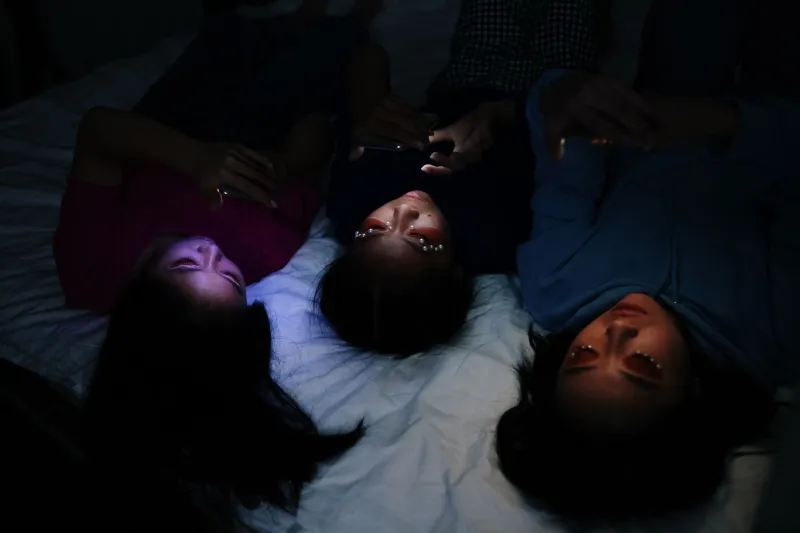
You set your phone down around 11 PM, maybe scroll a little too long, and finally drift off. By the time your alarm drags you back to consciousness at 7 AM, your notifications are a disaster zone. Some celebrity did what? A senator said that? A random clip from a local news broadcast somehow has 40 million views? Welcome to the overnight internet — a strange, semi-lawless stretch of hours where the rules of engagement shift dramatically and the algorithms that govern your feed quietly go to work without you watching.
This isn't an accident. It's a system. And once you understand how it operates, you'll never look at your morning feed the same way again.
The Quiet Hours Are Anything But Quiet
Between roughly midnight and 5 AM Eastern — when a huge chunk of the American population is offline — you might assume social platforms are basically idling. In reality, the opposite is closer to the truth. With fewer active users generating new content, the algorithms on platforms like X (formerly Twitter), TikTok, Instagram, and Facebook have to work harder to fill feeds. That means they lean more aggressively on existing content, amplifying posts that are already showing early engagement signals.
"Think of it like a bar at 2 AM," says Marcus Dreiling, a digital strategy consultant who has worked with entertainment brands and political campaigns. "There are fewer people, but the ones who are there are way more committed. They're engaging hard. The algorithm notices that intensity and treats it like a signal that something matters."
That intensity matters because most major platforms use some variation of engagement velocity — not just total likes or shares, but how fast those interactions are accumulating — as a key ranking signal. A post that racks up 10,000 interactions in 20 minutes at 1 AM can look more algorithmically significant than one that slowly gathers 50,000 over the course of a full day.
Why Some Stories Explode and Others Don't
Here's where it gets genuinely fascinating — and a little unsettling. Two stories with virtually identical news value can have wildly different trajectories depending on when they're posted, who first shares them, and whether early engagement comes from accounts the algorithm already considers high-authority.
Dr. Leila Osman, a researcher who studies platform dynamics at a mid-Atlantic university, describes it this way: "The algorithm isn't evaluating content the way a human editor would. It's evaluating behavioral signals. If a verified account with strong historical engagement shares something at midnight and their followers — who tend to be night owls or people in different time zones — immediately react, that creates a feedback loop that can carry a story all the way to trending status before most of the country even wakes up."
This is partly why celebrity scandals and political gaffes so often seem to "break" overnight. Fans and political junkies are disproportionately represented in late-night audiences. They engage fast and emotionally, which is exactly the kind of signal these systems reward.
The Time Zone Wildcard
America's own geography plays a surprisingly big role here. When it's 1 AM on the East Coast, it's still only 10 PM in California — prime scrolling hours for a huge population. West Coast users are fully awake, actively posting, and their engagement feeds right back into platforms that are simultaneously measuring signals from across the country.
Add in the global dimension and things get even more layered. While the US sleeps, audiences in the UK, Europe, and beyond are starting their days and discovering American content. A political clip or celebrity moment that lands during US overnight hours can rack up massive international engagement, which many platforms factor into their trending calculations in ways that then influence what American users see when they log on in the morning.
"I've had clients whose content basically went viral in Australia and the UK first," says content strategist Priya Mehta, who works with influencers and media brands. "By the time Americans woke up, it was already a 'thing' globally, and that social proof made it explode domestically too. The algorithm doesn't really care where the engagement comes from — engagement is engagement."
The Human Element: Who's Actually Posting at 3 AM?
Beyond the technical mechanics, there's a human story worth telling here. The accounts doing the most posting during overnight hours aren't just bots (though those exist too — more on that in a moment). They're night-shift workers, insomniacs, college students, people in different time zones, and a specific breed of extremely online news junkie who genuinely cannot wait until morning to react to something.
This audience skews younger and tends to engage more emotionally and impulsively — exactly the behavioral profile that produces the high-velocity engagement signals algorithms love. Political content, in particular, benefits from this dynamic. A controversial statement from a public figure posted late at night can be thoroughly dissected, quote-tweeted, and memed before the communications team that issued it has even had their morning coffee.
And yes, bad actors know this. Coordinated inauthentic behavior — networks of accounts designed to artificially boost content — often operates during off-peak hours specifically because the signal-to-noise ratio is different. Platforms have gotten better at detecting this, but it remains an ongoing challenge.
What Content Creators and Campaigns Actually Do With This Knowledge
If you think the people behind your favorite accounts aren't thinking strategically about all of this, think again. Sophisticated content teams — whether they're managing a celebrity's social presence, running a political operation, or growing a media brand — study their analytics obsessively and time posts with surgical precision.
"There's a real art to the 11 PM drop," Dreiling explains. "You want to catch the East Coast before they fully sign off, hit the West Coast at peak evening hours, and give the content enough runway to build overnight momentum. If you nail it, you wake up to something that's already trending. If you miss the window, even great content can just... disappear."
For political campaigns specifically, the overnight window has become a tool for damage control and counter-messaging. Drop a response to a bad news cycle late at night and it can shape the morning narrative before the original story has a chance to fully take hold.
So What Does This Mean for the Rest of Us?
Honestly? It means your morning feed is less a reflection of what happened overnight and more a reflection of what the algorithm decided was worth surfacing — based on signals generated by a relatively small, specific subset of users while you were unconscious.
That's not inherently sinister, but it's worth knowing. The viral celebrity moment you're talking about at the office didn't organically rise to the top because the whole country collectively agreed it mattered. It got there because a system optimized for engagement velocity, combined with the particular behavioral patterns of late-night audiences, selected it for amplification.
Next time you wake up to something that's already "broken the internet," take a beat before you add to the pile. Ask yourself: who was awake when this took off, and why did the algorithm decide it was worth waking you up for?
The answer is almost never as simple as "because it matters." But that's the overnight internet for you — always on, always optimizing, and absolutely not waiting for you to catch up.